Denim
With its initial use in workwear, denim is known for its rigid qualities and its ability to adapt to the wearer and their daily routine over time. Traditional blue jeans were dyed with natural indigo, a practice largely replaced by synthetic dyes in modern mass production.
Cotton fibers are spun into yarn, which is then separated into warp (vertical) and weft (horizontal) yarns. The warp yarns are repeatedly dipped in indigo, dyeing the surface while the core remains lighter. With time the yarns break down and reveal their lighter core as well as the white weft yarns. These discolorations are known as fades.
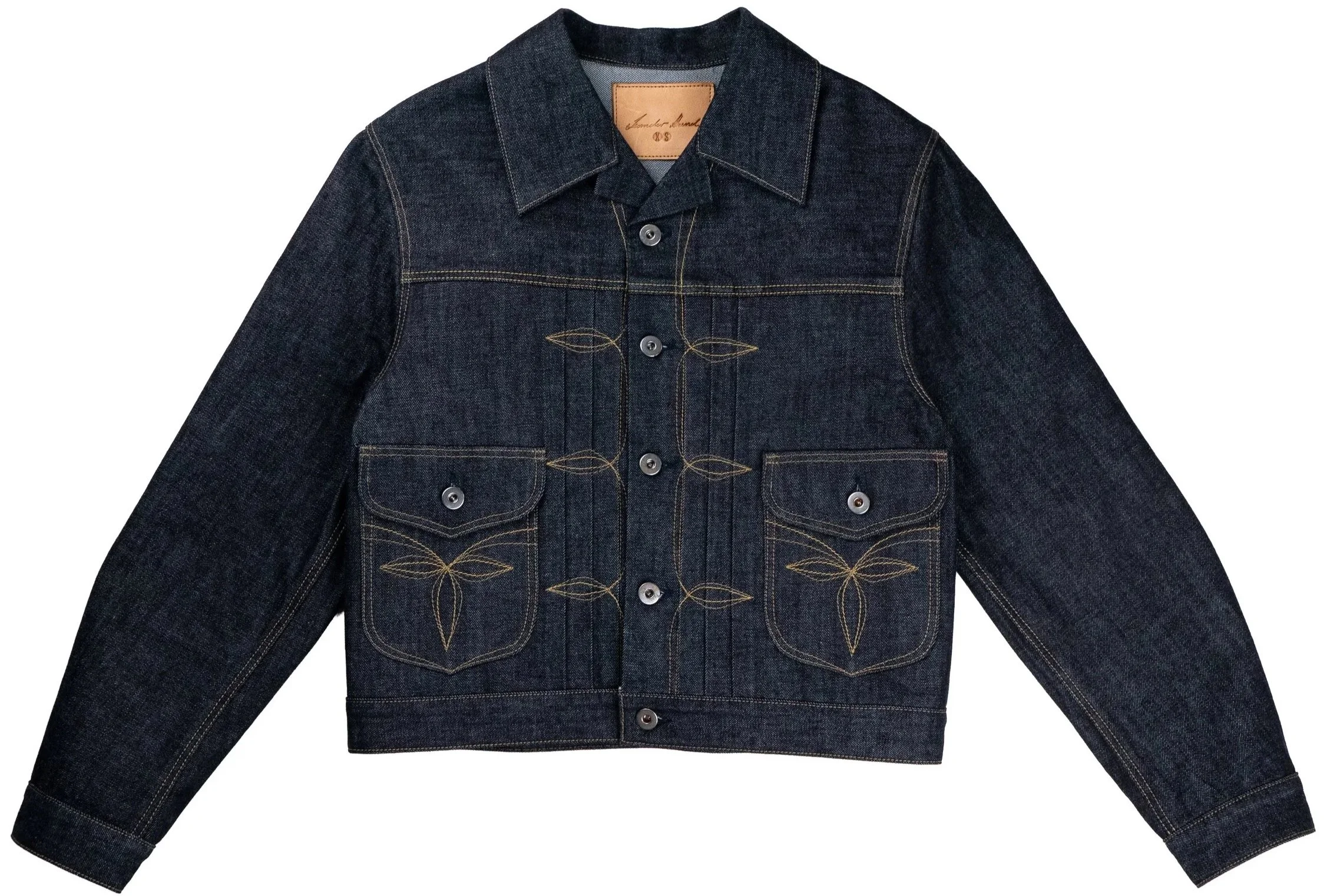
Our blue jeans are dyed exclusively with natural indigo and come raw, to be worn and broken in by you and tell your story.
Japanese Selvedge Denim
In the late 60’s American denim factories shifted to mass production, replacing their traditional shuttle looms with projectile looms. Shuttle looms produced narrower fabrics with greater density and durability, but couldn’t keep up with the faster and wider output of projectile looms. Japanese manufacturers took over shuttle loom production and continued to refine it — a level of denim quality that is now rare outside Japan.
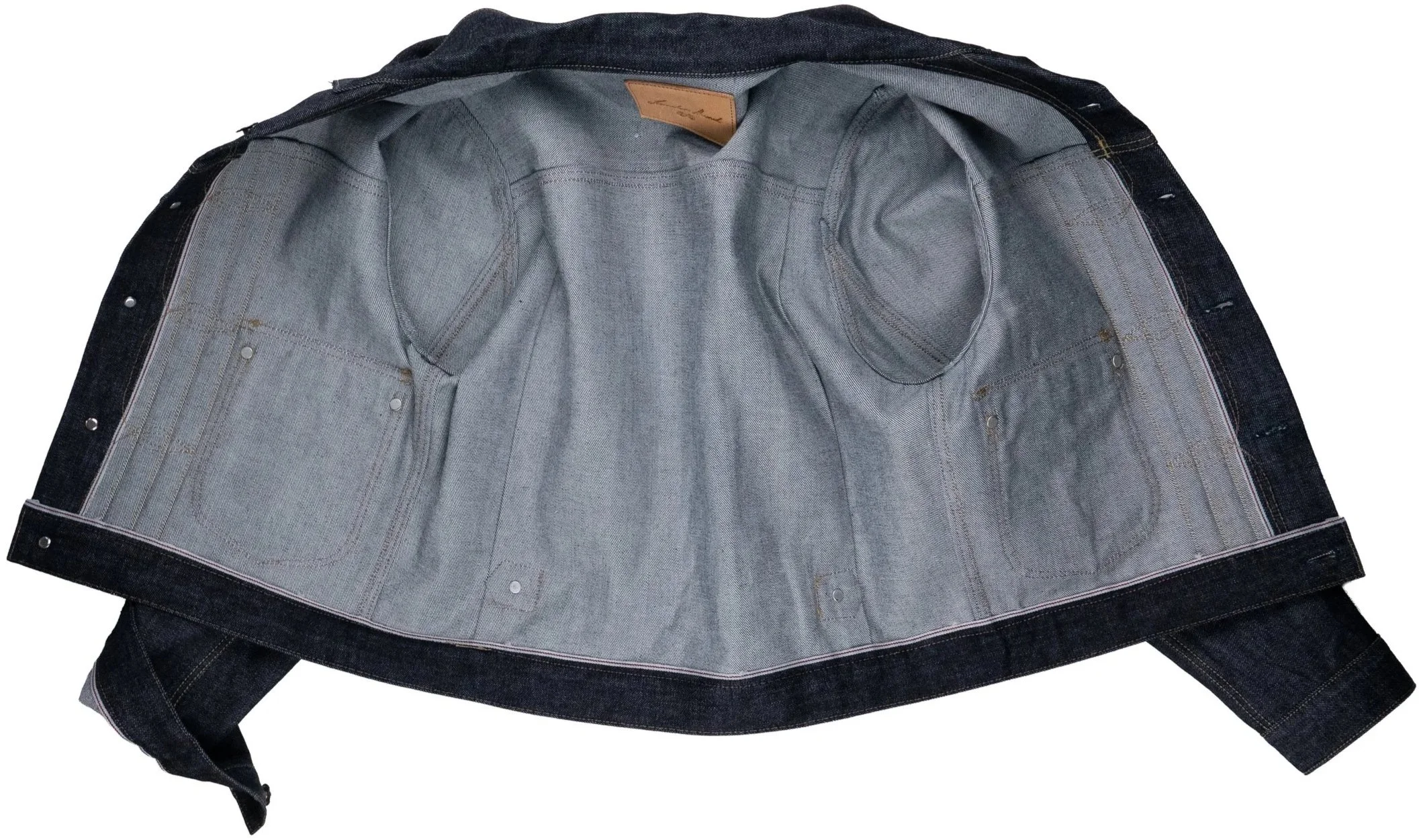
The key component for shuttle loom denim is that the warp yarns are spun continuously without being cut off at the edge of the fabric. Doing this results in a stronger fabric and creates the distinctive selvedge line on the edges of the fabric that gets used in the side seam of jeans and other parts of garments.
For our jeans and jackets we exclusively use Japanese made selvedge denim.
Construction
Flat felled seams enclose the raw edge and are sewn with two lines of stitching. This makes it not only the strongest seam possible but also neat and smooth on the inside of your garment. Typically a flat felled seam can be spotted on the inseam of jeans, however we use it on all seams possible. All other edges of seams are showing the selvedge of the fabric. Many parts of our garments are sewn with a single stitch machine, using slightly different shades of yarn. That way we are able to create intricate patterns and our signature floral topstitching.
Hardware
All of our hardware used for our denim products comes from one Japanese craftsman that makes button rivets and cinch buckles just the way they used to be made. There are no cheap components to it, and if worn down or teared over time every piece of hardware can easily be replaced.
Why Denim
Working with denim allows us to cut close to the body while maintaining proportion and structure.
With wear, it softens, molds and breaks in, supporting a more tailored silhouette while telling a personal story.